What to Do If You Can’t Reach an Emergency Dentist Immediately

A dental emergency has a way of shrinking your world. A cracked molar can make every breath of cold air feel sharp. A lost filling can turn dinner into a careful negotiation. A throbbing toothache at 11 p.m. Can leave even calm, practical people pacing the kitchen, phone in hand, trying to find an Emergency Dentist who is still answering calls.
When you cannot get immediate professional care, the goal changes. You are no longer trying to fix the problem at home. You are trying to protect the tooth, control pain, lower the risk of complications, and buy time safely until you can be seen. That distinction matters. The wrong home remedy can turn a treatable issue into a more complicated one by morning.
I have seen patients arrive after a long night of improvised solutions, some harmless, some costly. A little saltwater rinsing and careful cold compress use can help. Sleeping with aspirin pressed against the gum can burn soft tissue. Trying to glue a crown back in place with household adhesive can create a mess your dentist now has to remove before treatment can even start. In a real emergency, good judgment matters almost as much as speed.
First, figure out what kind of emergency you have
Not every urgent dental problem carries the same level of risk. Discomfort is one thing. A spreading infection or uncontrolled bleeding is another. If you cannot reach an Emergency Dentist right away, start by deciding whether this is a wait-for-morning situation, an urgent same-day medical issue, or a trip to the emergency room.
A severe toothache can feel dramatic without being life-threatening, but facial swelling that is growing, difficulty swallowing, trouble breathing, fever, or pus with a bad taste in the mouth can signal an infection that should not be left to chance. Trauma also changes the picture. A knocked-out permanent tooth has a narrow window where quick action can improve the odds of saving it. A broken jaw, deep cut, or bleeding that does not ease needs medical attention, even if a dentist is your eventual destination.
It also helps to distinguish between temporary irritation and structural damage. A lost filling, chipped edge, or loose crown may be manageable for a few hours if pain is controlled and the tooth is protected. A cracked tooth that hurts when you bite, however, can worsen quickly under pressure. I have known people who assumed they could “chew on the other side” for a day, only to split the tooth further at lunch.
What to do in the first hour
If you are stuck waiting, keep your actions simple and deliberate. This is the period when people are most tempted to poke, scrub, clamp, or self-medicate too aggressively.
- Rinse your mouth gently with warm saltwater, especially if food debris is trapped or the area feels inflamed.
- Use a cold compress on the outside of the cheek for swelling, usually 15 to 20 minutes on and off.
- Take an over-the-counter pain reliever as directed on the label, if you can safely take it.
- Protect the tooth from further pressure by avoiding chewing on that side.
- Save any broken tooth piece, crown, or restoration in a clean container if you can find it.
Those basic steps solve nothing permanently, but they often prevent the situation from getting worse overnight. Saltwater is useful because it cleans gently without the harshness of alcohol-based rinses. A cold compress helps with swelling and can dull pain. What it does not do is treat infection at the source, which is why worsening swelling should never be brushed off as “just inflammation.”
Pain control without making the problem worse
Dental pain has a unique ability to wear people down. It can radiate into the ear, jaw, temple, and neck. It can keep you from sleeping, which then makes everything feel more urgent and less manageable. If you cannot get in to see an Emergency Dentist immediately, focus on safe pain control.
Over-the-counter medication is usually the first line, assuming you do not have medical reasons to avoid it. Follow the package directions closely. More is not better. Taking repeated extra doses through the night is a common mistake, especially when the first dose does not seem to touch the pain right away. Keep track of what you took and when. By morning, people are often too tired to remember, which creates risk if a doctor or dentist wants to recommend additional medication.
Position matters more than many expect. Lying flat can increase pressure in the head and make a throbbing tooth feel worse. Prop yourself up with an extra pillow or rest in a reclined position rather than completely flat. It is a small adjustment, but some patients notice a real difference within minutes.
Food choices matter too. Avoid anything very hot, very cold, sugary, hard, or sticky. Even a seemingly soft granola bar can turn into a problem if it packs into a broken molar. Lukewarm soups, yogurt, scrambled eggs, mashed potatoes, oatmeal, and smoothies that are not ice cold tend to be easier to tolerate. Chew away from the painful side if chewing is possible at all.
Clove oil gets mentioned often in home care conversations. Some people find it soothing, but it can irritate tissue if used carelessly or in strong amounts. If you try it, use very little and avoid soaking the area. A gentle, temporary measure is fine. Flooding the gum with concentrated remedies is not.
If a tooth is knocked out
This is one situation where every minute matters. A knocked-out permanent tooth can sometimes be saved if handled correctly and reimplanted quickly by a professional. Baby teeth are different and generally should not be put back into place, because doing so can harm the developing permanent tooth underneath.
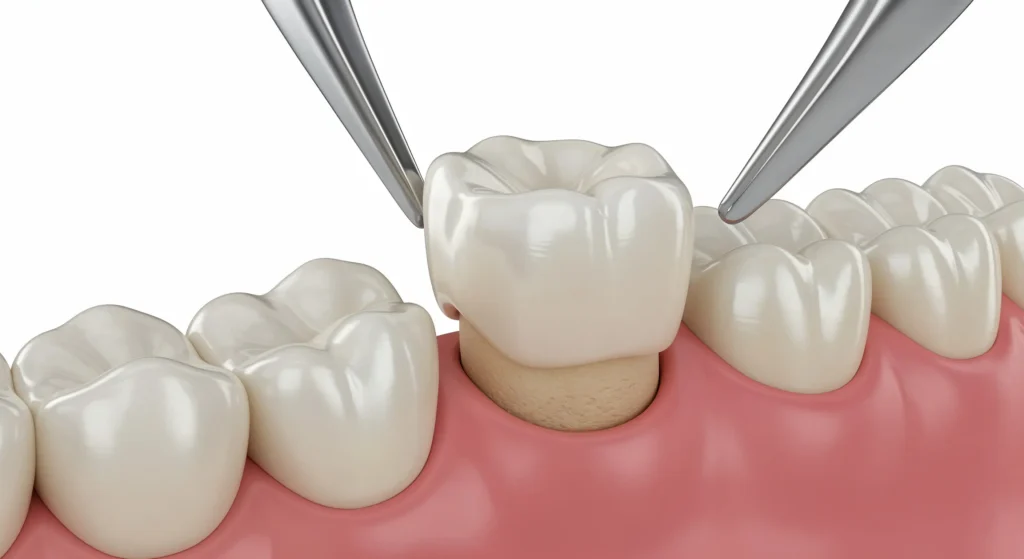
If a permanent tooth is knocked out, pick it up by the crown, not the root. If it is dirty, rinse it briefly with milk or clean water. Do not scrub it, and do not wrap it in tissue where it can dry out. If you are able, gently place it back into the socket and bite lightly on clean gauze or cloth to hold it there. If that feels impossible, store the tooth in milk or inside the cheek if the person is old enough to do that safely without swallowing it.
I have seen teeth arrive dry in a napkin after an hour in a hot car. At that point the odds drop sharply. By contrast, a properly stored tooth that gets prompt attention has a far better chance. Even if you cannot reach your regular Emergency Dentist, this is one of the times it is worth calling every urgent dental office in your area, then considering an emergency room if the injury includes facial trauma, heavy bleeding, or possible jaw injury.
If a crown, filling, or veneer comes off
A lost restoration feels alarming, but it is often manageable for a short period if the underlying tooth is protected. The exposed tooth may be sensitive to air, temperature, and pressure. Rinse gently and keep the area clean. If you have the crown, keep it. Sometimes it can be recemented if it is intact and the tooth underneath is suitable.
Drugstores often carry temporary dental cement. Used exactly as directed, it can help hold a crown in place until you are seen. This is not a substitute for treatment, and it is not the time to improvise with super glue or household adhesive. I cannot stress that enough. Permanent glues are toxic in the mouth, can damage tissue, and make proper refitting much harder.
A missing filling leaves a cavity open to food and bacteria. Some people use temporary filling material sold over the counter. That can be reasonable for a very short window, provided the area is clean and you are not forcing material into a deep, painful hole. If placing anything increases pain sharply, stop and wait for professional care.
Veneers are a little different because the issue is often cosmetic plus mild sensitivity rather than deep pain. Still, the tooth underneath can be rough or vulnerable, and swallowing or losing the veneer is common. Save it if you can and avoid trying to reattach it with anything not made for temporary dental use.
If the tooth is cracked, chipped, or broken
The severity of a broken tooth is not always obvious from the size of the missing piece. A small chip on a front tooth may be mostly cosmetic. A crack in a back tooth can be far more serious, especially if it hurts when you bite down or release pressure. That pattern often suggests the crack is moving under force, which can mean the tooth is structurally compromised.
Rinse the mouth, control any bleeding with clean gauze, and use a cold compress outside the face if swelling develops. Save fragments if you find them. Sharp edges can cut the tongue or cheek, so covering them temporarily with dental wax or sugar-free gum can help. Keep in mind that this is only a barrier. It does not stabilize the tooth.
If the break exposes the inner part of the tooth, pain may be intense and temperature sensitivity extreme. In that case, avoid testing it. People often keep checking whether it still hurts with cold water, tapping, or gentle biting. That repeated “experimenting” usually adds irritation without yielding useful information.
Swelling, infection, and the signs you should not ignore
A lot of dental emergencies are painful but not dangerous in the short term. Infection changes that. A dental abscess can start as a localized tooth problem and spread into surrounding tissues. The key warning signs are increasing swelling, gum tenderness with pus drainage, fever, swollen lymph nodes, difficulty opening the mouth, trouble swallowing, and a generally unwell feeling that goes beyond a bad tooth.
Swelling near the jawline or under the eye deserves special attention. If the face looks visibly puffy and that swelling is progressing, do not wait around hoping morning will solve it. If swallowing becomes difficult or breathing feels at all restricted, skip the dental phone tree and seek emergency medical care. That is no longer a routine dental problem.
I have spoken with patients who thought the pressure in their face was “just sinus trouble” because the upper teeth were aching. Sometimes it is sinus-related, but sometimes a tooth infection in the upper back teeth creates referred pain and pressure that mimics sinus pain. When swelling is present, the distinction matters.
Antibiotics are sometimes needed, but leftover antibiotics in a bathroom cabinet are not a safe plan. They may be the wrong drug, the wrong dose, or too few tablets to be effective. More importantly, antibiotics alone often do not solve the underlying dental source. They may calm symptoms briefly while the pressure and infection remain trapped. Definitive treatment usually still requires draining the infection, root canal treatment, extraction, or repair of the tooth.
Bleeding after an injury or extraction
Bleeding in the mouth can look dramatic because saliva dilutes blood and spreads it around, but that does not mean you should ignore it. If a tooth was injured or recently extracted and the site is oozing, fold clean gauze or a clean damp cloth, place it over the area, and apply steady pressure. Hold it there without repeatedly checking every minute. Constant lifting of the gauze breaks the clot before it can stabilize.
If you had an extraction and now suspect the clot is not forming well, avoid vigorous rinsing, spitting, straws, smoking, and anything else that creates suction or agitation. Those habits are classic setup factors for dry socket, which is not usually dangerous but can be extremely painful.
Bleeding that continues despite firm pressure, especially after trauma, needs prompt attention. The same is true if there is a large laceration in the lip, tongue, or gums, or if the injury came with a blow strong enough to suggest a jaw fracture. Teeth can often wait a few hours. Deep soft tissue injuries should not.
What not to do while you wait
A lot of after-hours dental suffering comes from bad advice passed around casually. Some of it is old folklore. Some of it is internet improvisation. Much of it sounds plausible until you see the damage it causes.
- Do not place aspirin directly on the gum or tooth.
- Do not use super glue, craft glue, or hardware adhesives inside the mouth.
- Do not apply heat to a swollen face, especially if infection is possible.
- Do not keep chewing on a cracked or painful tooth to “test” it.
- Do not ignore facial swelling, fever, or trouble swallowing.
The aspirin issue comes up constantly. Aspirin can be a useful medication when swallowed appropriately, but pressed against the gum it can cause a chemical burn. I have seen white, sloughing tissue around an already painful tooth because someone was trying to numb it overnight.
Heat is another common error. People often think heat helps pain in general, and sometimes warm compresses do help muscle tension. But when a dental infection is involved, external heat can aggravate swelling. Cold is the safer choice unless a clinician has advised otherwise.
How to get through the night
Nighttime amplifies dental pain. Offices are closed, pharmacies may be on reduced hours, and fatigue lowers your tolerance. The best overnight strategy is usually the least dramatic one.
Keep the area clean with gentle rinsing. Eat lightly if you are hungry, but do not push through pain to prove you can. Take medication exactly as directed. Sleep with your head elevated. Set out what you need before bed, gauze, water, your phone charger, and the number of the office you plan to call first thing in the morning. If you have a fragment, crown, or knocked-out tooth being stored, place it somewhere obvious so it does not get discarded accidentally at 2 a.m.
Parents dealing with a child’s dental emergency face an extra challenge because children often struggle to describe what they are feeling. Watch behavior. A child who refuses to chew, cries with cold drinks, wakes repeatedly, or holds the jaw may be giving you the clearest information you will get. If a child has swelling, fever, trauma, or bleeding that does not stop, treat that seriously and seek care sooner rather than later.
The difference between a dentist’s emergency line and the emergency room
People often assume the emergency room can handle any dental problem. In reality, hospitals are best equipped for the medical side of dental emergencies, not the dental repair itself. They can assess infection spread, provide pain control, manage bleeding, address facial trauma, and intervene when breathing or swallowing is threatened. What they usually cannot do is complete a root canal, place a crown, or restore a broken tooth in the same way a dentist can.
That is why calling an Emergency Dentist remains the best route whenever the problem is primarily dental and you are medically stable. But there are clear exceptions. Go to the emergency room if you have trouble breathing, trouble swallowing, rapidly increasing swelling, facial trauma with possible fracture, uncontrolled bleeding, or a high fever with signs of spreading infection.
If you are not sure, err on the side of safety. It is better to be told a problem could have waited than to wait on a problem that should not have.
What to tell the office when you finally get through
When a dental office opens, the quality of your description affects how quickly they can triage you. “My tooth hurts” is true, but it does not help much. Give a focused summary. Say when the pain started, whether it is constant or only when biting, whether the area is swollen, whether you have fever, whether trauma occurred, and whether you have taken any medication. Mention if a crown came off, a tooth was knocked loose, or you see pus.
Photos can help in some cases, especially for visible swelling, broken teeth, or soft tissue injuries, but use them as a supplement, not a substitute for a clear explanation. Offices often fit emergencies in based on severity rather than time of call, so the details matter.
One practical tip from experience, if you leave a voicemail after hours, keep it concise and include your full name, callback number spoken slowly, and the nature of the emergency in one sentence. A message that is calm and complete is easier to act on quickly than a frantic recording with no callback number at the end.
After the immediate crisis, think prevention
Many dental emergencies are not random. They are the final event in a chain that started weeks or months earlier. A cracked filling, untreated cavity, night grinding, skipped cleanings, or an old crown hanging on by habit rather than strength can all turn into an after-hours crisis. That is not a moral judgment. It is simply how teeth behave. They often tolerate slow damage quietly until they suddenly do not.
Once the acute problem is handled, ask a few blunt questions. Was there an earlier sign you overlooked, such as sensitivity, occasional pain when biting, or food catching in one spot? Do you clench your teeth at night and need a guard? Are old restorations being monitored? If you play contact sports, do you have a properly fitted mouthguard, not just a flimsy one from a sporting goods rack? Prevention is less dramatic than emergency care, but it is far cheaper and much easier on your nerves.
The most useful mindset is this: if you cannot reach an Emergency Dentist immediately, your job is to stabilize, not solve. Clean the area gently. Control pain carefully. Protect the tooth from further damage. Watch for red flags that move the issue into urgent medical territory. Then get definitive care as soon as the right office or facility is available. That approach will not make a dental emergency pleasant, but it can keep a bad night from https://jasperwang675.lowescouponn.com/emergency-dentist-solutions-for-sharp-tooth-fractures becoming a much bigger problem.
Simple Dental South Gate
Address: 8617 California Ave, South Gate, CA 90280
Phone number: +13236896118
FAQ About Emergency Dentist Southgate CA
What can the ER do for a tooth?
The emergency room can provide temporary symptom relief for a bad tooth, such as prescribing pain medicine or antibiotics, but it cannot fix the actual dental problem.
What is the 3-3-3 rule for tooth infection?
The 3-3-3 rule for a toothache or infection typically means taking three 200 mg ibuprofen tablets (600 mg total) three times a day for no more than three days to control pain and swelling while waiting to see a dentist.
What do you do if you have a dental emergency but no dentist?
If you have a dental emergency and no regular dentist, you should search for an urgent care dental clinic, call local walk-in dental offices, or go to a hospital emergency room if you have severe bleeding, swelling, or trouble breathing.